From Script to Screen: The Anatomy of a Scene
Discover how a scene evolves from first draft to final cut, breaking down objectives, subtext, blocking, coverage, sound, and edit into one cohesive beat.
Blueprint on the Page
A great scene starts as intention on paper. In the script, each moment carries a clear objective, a pressing obstacle, and real stakes that threaten or reward the characters. Writers craft beats that turn the energy, guiding audiences through shifting tactics and surprising reversals. Dialogue reveals character through subtext, while action lines emphasize behavior and image, not camera directions. Strong scenes honor point of view, filtering events through a character whose needs color the world. The rhythm of sentences, the balance of silence and speech, and the placement of a final turn or hook determine momentum. Even in entertainment built for spectacle, clarity matters: what changes between the first and last line? The answer defines the scene's reason to exist. By privileging visual verbs, planting purposeful details, and orchestrating conflict that escalates rather than repeats, the page becomes a blueprint for emotional movement. It's the first invitation to collaborate across departments and translate story into sensation.
Breaking Down the Scene
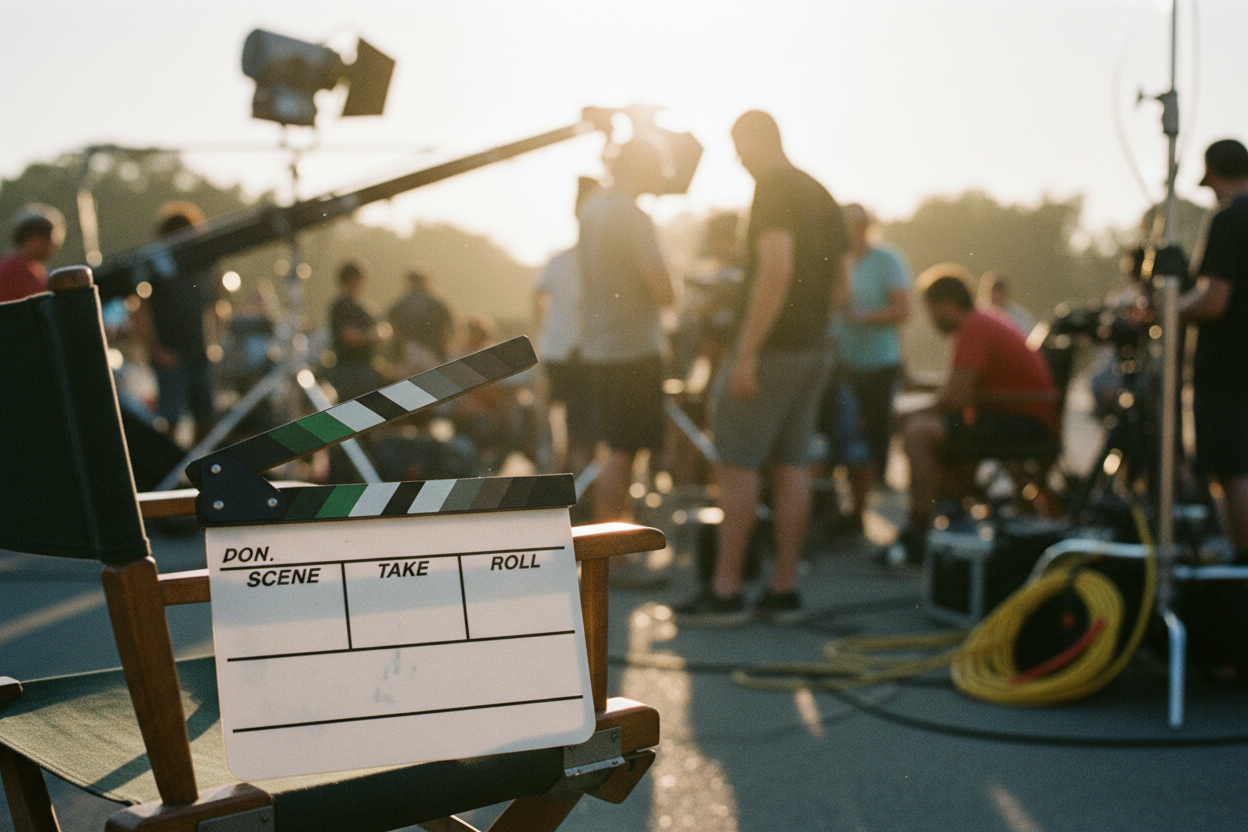
Once the words are set, the team transforms ideas into a map. A scene breakdown identifies characters, locations, time of day, props, set dressing, wardrobe needs, stunts, and potential VFX or SFX. Each item aligns with the emotional beats, so resources support story intent, not just logistics. Directors and cinematographers build a shot list that tracks perspective: who deserves the close-up when the conflict peaks? Visual references, mood boards, and storyboards define a tone that connects color, texture, and contrast to theme. Overheads and floor plans clarify entrances, exits, and geography, ensuring that movement and sightlines will remain coherent on the day. The process also exposes constraints—limited time, complex choreography, or sound sensitivity—that inspire creative solutions. By treating the page as a living document and the breakdown as a conversation starter, the production aligns on visual motifs and narrative priorities. The result is a plan calibrated to capture emotion efficiently, with built-in flexibility to follow inspiration.
Blocking and Staging
With a plan in place, the director translates intention into blocking and staging. Where actors stand, how they cross, and when they turn the body create a visual map of power dynamics and desire. Mise-en-scène arranges foreground, midground, and background to express theme: closeness reveals intimacy or pressure; distance signals isolation or control. Subtle choices like a character stepping into light or drifting behind an obstacle can dramatize a shift in status without a word. Clear eyelines guide audience focus, while entrances and exits punctuate beats and set up turns. Business with props grounds performances in behavior, adding texture and revealing psychology. Rehearsal allows discovery—moments of silence, stolen glances, or shared breath that aren't on the page but belong to the truth of the scene. The aim is legible geography that supports tension and rhythm. Smart staging gives the camera options, preserves continuity, and ensures that movement remains motivated by character, not convenience.
Camera as Narrator
Cinematography shapes how the audience feels the beat. Lens choice sculpts intimacy: wider lenses expand space and emphasize relationships to environment, while longer lenses compress distance and spotlight micro-expressions. Shot size declares empathy—an extreme close-up can expose vulnerability; a wide can isolate a figure against overwhelming context. Movement carries meaning: a deliberate push-in underscores a realization; a lateral track parallels shifting alliances; a still frame can trap a character in consequence. Composition principles—leading lines, negative space, headroom, and the rule of thirds—guide attention and tone. The 180-degree rule and 30-degree rule keep continuity readable, while shot-reverse-shot honors listening as action. Thoughtful coverage protects the edit, but excess angles can dilute intention. The camera should feel motivated, responding to character energy rather than showing off. By uniting composition, focus, and pace of movement, the camera becomes a narrator, not a witness, translating inner life into cinematic language.
Guiding Performance
In the crucible of a take, the director steers performance toward specificity. Clear objectives and tactics keep actors playing action rather than emotion, which keeps moments alive and playable. Beats are marked, but discovery is welcomed; spontaneity can reveal the exact gesture or glance that unlocks the scene. Adjustments are most effective as active verbs—push, invite, disarm—so choices remain playable under pressure. Subtext anchors lines in need, while listening authenticates reaction shots that editors will prize. Practical details matter: marks, eyelines, and props must support behavior, not cage it. Continuity supervisors track continuity of emotion alongside wardrobe and movement, so the arc survives across angles and resets. When appropriate, light improvisation can create organic overlaps, interruptions, and silences that mirror real conversation. The set becomes a safe container for risk, where the pursuit of a character's want is sharper than a plan to illustrate an idea. Truth leads; the lens follows.
Light, Sound, and Atmosphere
Image and audio sculpt the world the characters inhabit. Lighting is story: a motivated key hints at source and mood; fill and contrast ratio modulate warmth, secrecy, or dread. Backlight separates figures from the background, while diffusion, bounce, and flags shape faces and textures. Color choice—gels, practicals, and mixed temperatures—establishes tone and texture, echoing theme through a nuanced palette. On set, sound design begins at the mic. Boom placement favors clarity and natural space; lavaliers provide consistency during movement. Capturing room tone, wild lines, and specific ambience gives editors glue. Silence is a tool too, allowing air for a look or breath to land. Effects and foley build tactile reality—footfalls, fabric, a glass set down just too hard. Music, whether rhythmic pulse or restrained motif, partners with pacing to underline emotional turns. Together, light and sound create atmosphere, turning action into sensation and guiding the audience's heartbeat through the scene.
Editing the Moment
In the cut, the scene discovers its final voice. Editors sift performances and coverage to reveal the cleanest spine of action and subtext. Editing thrives on contrast: cut on action to propel momentum; linger on a reaction to let meaning bloom. L-cuts and J-cuts reshape time, carrying sound across picture to build continuity of feeling. Inserts and cutaways punctuate beats, while match-on-action preserves fluidity across angles. Compression prunes repetition; expansion makes room for revelation. Rhythm stems from character need—fast when pursuit is sharp, suspended when doubt takes over. A well-placed sound bridge or breathing silence can do more than a flourish of camera moves. Color balance and final mix align the scene's visual and sonic language, unifying tone and dynamics. The goal isn't to preserve every beautiful shot; it's to serve the beat that changes the story. When the cut breathes with the characters, the scene lives on the screen.