The Ultimate Guide to Storing Fresh Produce
Keep produce fresher for longer with by-type storage tips, ideal temps, humidity hacks, ripening rules, and what to refrigerate or keep on the counter.
Freshness Fundamentals: In the world of food and groceries, getting produce from market to plate at peak quality hinges on understanding ethylene, humidity, airflow, and temperature. Many fruits release ethylene gas, which speeds ripening; keep ethylene producers like bananas, avocados, and apples away from ethylene-sensitive items such as leafy greens and berries. Aim for steady cool temperatures for most produce, but avoid the coldest fridge spots that can cause chilling injury to tomatoes, cucumbers, and tropical fruits. Manage humidity with crisper drawers: high humidity slows wilting for greens, while low humidity helps prevent condensation on fruits. Prioritize airflow by avoiding overpacking; crowded bins trap moisture and accelerate spoilage. Start clean: rinse drawers, dry thoroughly, and keep a dedicated cloth or liner to catch drips. Store ready-to-eat items front and center to support FIFO (first in, first out). Finally, sort by ripeness on arrival, using a triage bowl for items that should be eaten soon, and a separate area for longer keepers.
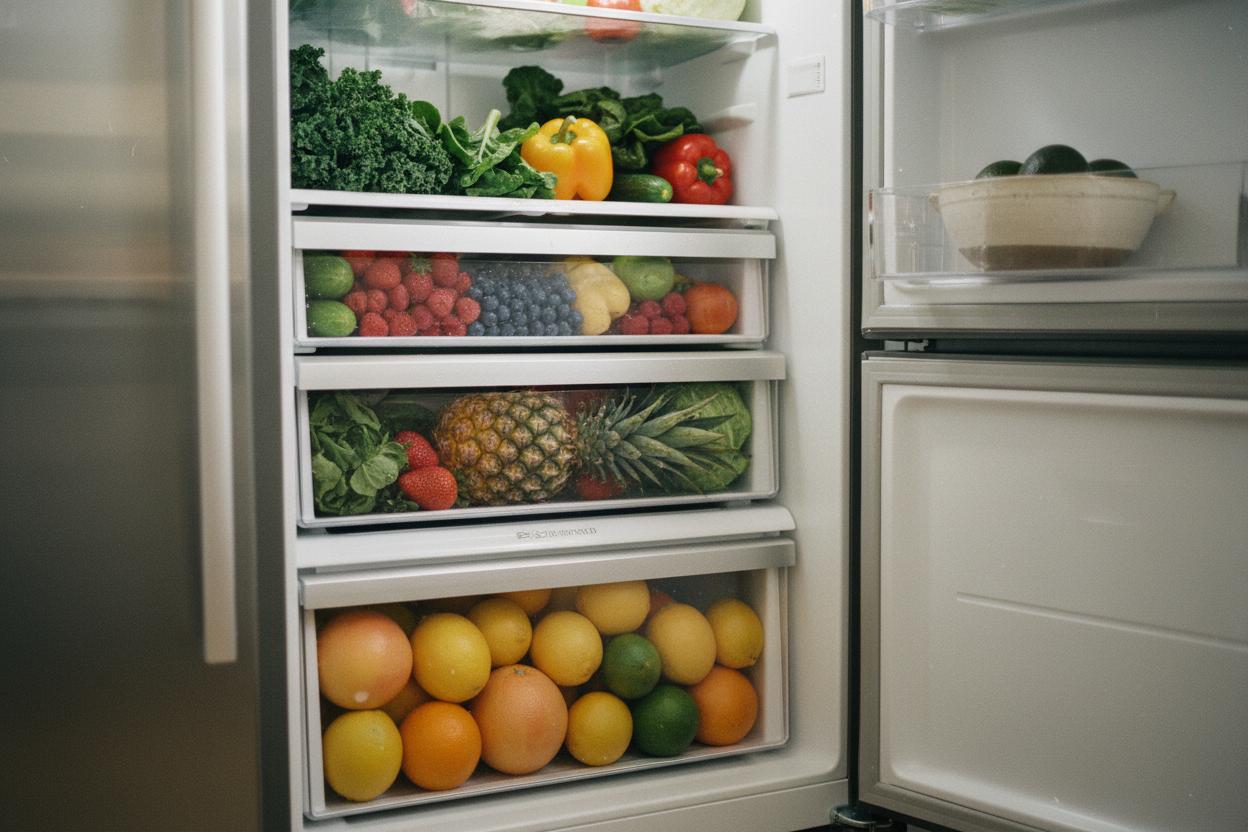
Where to Store What: Think of storage as zones: fridge, counter, and pantry. In the fridge, use the high-humidity drawer for leafy greens, herbs, broccoli, and carrots, and the low-humidity drawer for apples, grapes, and pears. Keep berries cold and dry in a breathable container. On the counter, let tomatoes and stone fruits ripen at room temperature for best flavor, then refrigerate briefly once ripe to pause further softening. Bananas, citrus, and avocados prefer the counter until ripe; cold can dull their texture or aroma. In a cool, dark pantry, store onions, garlic, winter squash, and potatoes separately; avoid placing onions and potatoes together, as moisture and gases encourage sprouting. Keep cucumbers and peppers in the fridge crisper but away from the coldest back wall. For ripening help, place an avocado near a banana in a breathable bag, checking daily. Always separate raw proteins from produce to prevent cross-contamination.
Smart Prep and Packaging: A little prep builds serious staying power. Delay washing delicate items like berries until just before eating to avoid excess moisture. For leafy greens, wash, spin dry, and store in a container lined with a dry paper towel to manage humidity; refresh the towel as needed. Treat herbs like flowers: trim stems, place in a small jar of water, and loosely cover leaves with a breathable bag; for hardy herbs, wrap in a slightly damp towel and box them. Keep mushrooms in a paper bag to reduce condensation. Wrap cucumbers individually in a dry towel to absorb surface moisture. Submerge peeled carrots and cut celery in cold water, changing it periodically, to retain crunch. Choose breathable bags, perforated produce bags, or vented containers to prevent sogginess, and avoid tightly sealed plastic unless produce is thoroughly dried. For cut fruit, add a squeeze of citrus to slow browning, then store airtight in the fridge. Label containers with item and date to support FIFO.
Shelf-Life Boosters and Freezing: To extend abundance, lean on freezing, pickling, fermenting, and dehydrating. Blanch firm vegetables like green beans, broccoli, and corn for a short time, cool quickly, dry well, then freeze in flat, labeled bags for easy stacking. Spread berries and cut stone fruit on a tray to flash freeze before transferring to containers, preventing clumping. Portion produce in use-ready sizes, so you only thaw what you need. Turn surplus herbs into pesto or chimichurri and freeze in small cubes; for tender herbs, chop and freeze with a bit of oil or broth. Quick pickles preserve cucumbers, radishes, and onions while adding punch to meals. Use citrus or vinegar dips to protect cut apples and pears from browning. For leftovers, store produce separately from dressings and sauces to preserve texture. Keep an eye on freezer temperature and pack containers tightly to reduce freezer burn.
Troubleshooting and Weekly Routine: Make freshness a habit with a simple routine. Each week, clean crisper drawers, replace absorbent liners, and scan for early signs of spoilage such as soft spots, off odors, or excess moisture. Practice inventory rotation: move older items to the front, keep a visible ripening bowl on the counter, and pair meal planning with what needs using first. Separate high-ethylene fruits from sensitive vegetables, and ventilate storage areas to deter condensation. Beware common myths: washing everything on arrival can invite mold, and sealed containers without airflow can trap humidity. If something spoils, remove it promptly to prevent spread. Repurpose nearing-their-prime items into soups, smoothies, sauces, and stir-fries, or freeze for later. Keep a small bin for trim you will cook soon and a separate container for compost to reduce waste. With consistent organization, smart prep, and attentive storage, you will cut costs, extend shelf life, and enjoy produce that tastes as vibrant as the day you bought it.